
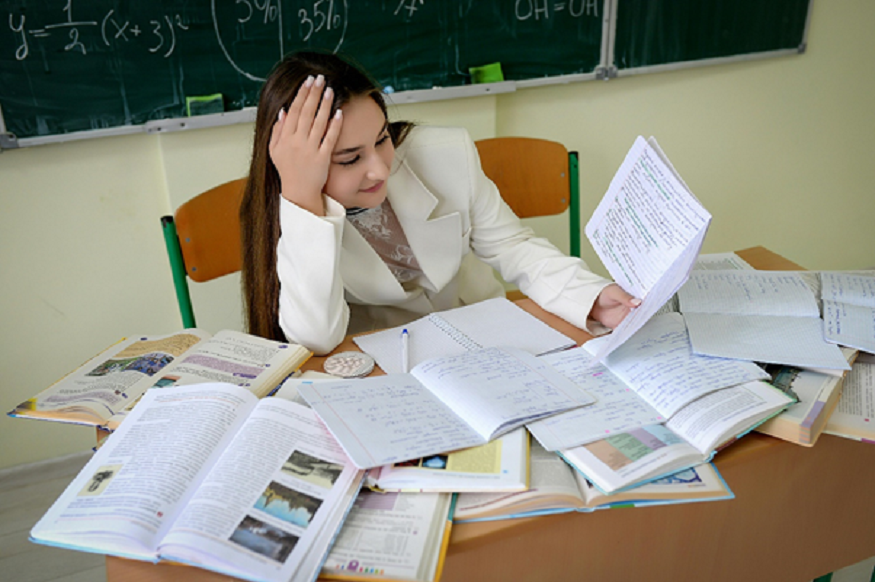
The UAE invests more per student in education than almost any nation on earth. Its Vision 2031 places human capital at the very centre of national transformation. Dubai’s schools attract talent from across the globe. Educators from over a hundred nationalities walk into classrooms every September, carrying world-class qualifications and genuine dedication.
And yet, teacher burnout is real. Teacher attrition is rising. The quiet exodus of brilliant, experienced educators from the profession, not just from Dubai, but globally, is one of the most consequential crises in modern education.
The reason is rarely salary. It is rarely the workload alone, either. The research is unambiguous: teachers leave cultures, not jobs. They leave environments where their expertise is not trusted, their voices are not heard, and their humanity is not seen. They leave when respect is a word on a wall rather than a practice in the corridors.
Building a culture that genuinely respects teachers is not a soft aspiration. In Dubai’s intensely competitive, results-driven school environment, it is a strategic imperative.
The Key to Building Low-Stress, High-Trust Schools
Here are five ways to build it: deliberately, durably, and before your next brilliant educator starts quietly updating their CV:
1. Make Autonomy the Architecture, Not the Exception
Walk into a school where teachers are thriving, and you will notice something almost immediately: they are not executing instructions. They are making decisions.
Autonomy is not the absence of accountability; it is its highest form. When an educator is trusted to design a unit, choose a pedagogical approach, or adapt a lesson to the real human beings sitting in front of them, they are not being given freedom. They are being given professional respect.
In many Dubai schools, the pressure for curriculum uniformity and inspection readiness has quietly eroded teacher autonomy over time. Lesson plans are templated. Observations become performances. The educator stops being a practitioner and becomes a compliance officer, and that shift, more than any other, is where the joy of teaching goes to die.
School leaders who want to build a culture of respect must ask an honest question: Are our systems designed to support teacher judgment, or to replace it?
The most effective schools in the UAE are those where teachers feel trusted enough to take professional risks. It is where trying a new approach is celebrated even when it doesn’t land perfectly, because the culture understands that growth and guaranteed outcomes cannot coexist. This kind of mindset is often cultivated through programs like a strategic leadership course for educators in Dubai, where leaders learn to build trust-driven, innovation-friendly school environments.
2. Design Psychological Safety into Every Meeting Room
Dubai’s schools are, by nature, high-performance environments. Parents are invested, expectations are steep, and inspection frameworks are rigorous. In that pressure cooker, meetings can quietly become spaces where only the safe opinion survives.
Psychological safety, the confidence that you can speak honestly without professional consequences, is not a luxury. It is the single strongest predictor of team performance, according to decades of organizational research. And it is built or broken in the small moments: how a leader responds when someone raises a concern, whether disagreement is welcomed or managed away, whether mistakes are examined or buried.
A teacher who cannot say “I am struggling with this class” without fear of judgment is a teacher accumulating stress with nowhere to put it. Over time, that stress does not disappear. It becomes cynicism, disengagement, illness, or resignation.
Leaders who build psychologically safe cultures in Dubai’s schools do specific, deliberate things. They model vulnerability, and they share their own uncertainties. They thank people for raising difficult truths. They separate performance conversations from pastoral ones. They understand that the goal is not a room full of agreement, but a room full of honest intelligence.
3. Protect Time as If It Were a Budget Line
In Dubai’s schools, time is the currency that teachers spend the most and receive the least. The ask is relentless: mark the books, attend the meeting, email the parent, update the tracker, complete the CPD module, prepare for the walkthrough, differentiate the lesson, respond to the data, and do all of it with warmth, energy, and a smile that reassures a seven-year-old that the world is a safe and wonderful place.
Every task added to a teacher’s plate without a task removed is a quiet act of institutional disrespect. It signals that their time, their finite, non-renewable professional resource, is not valued.
Schools serious about teacher wellbeing audit their demands with the same rigour they audit student outcomes. They ask: Is every meeting necessary? Is every form serving learning, or serving the system’s need to feel organized? They fiercely protect preparation time. They do not fill every free period with cover. They understand that a teacher who has had space to think comes into a classroom as a different person than one who has been running since 7 a.m. without pause.
Protecting teacher time is not an act of generosity. It is an act of educational intelligence.
4. Build Recognition That Means Something
The most common mistake schools make with teacher recognition is making it generic. The end-of-term certificate. The all-staff email that thanks everyone for their “tremendous effort.” The employee of the month photograph is on a board that no one stops to read.
Recognition that genuinely reduces stress and builds culture is specific, timely, and personal. It says: I saw what you did. I know why it was hard. I want you to know it mattered.
This kind of recognition requires leaders to be present, not just administratively, but humanly. It requires knowing teachers as professionals and as people. It requires walking through the school with eyes open to excellence, not only to areas for development.
In Dubai’s multicultural school environments, this demands an additional layer of cultural intelligence. What feels like genuine recognition to an educator from one background may feel hollow or performative to one from another. Leaders who invest in understanding the diverse communities of professionals they serve, their values, their communication styles, and their definitions of respect, and build recognition cultures that land.
5. Develop Leaders Who Lead With Teachers, Not Over Them
Every cultural failure in a school can be traced, eventually, to leadership. Not to the leader as a villain, but to leadership as a practice that was never built on the right foundations.
The schools in Dubai and across the UAE with the strongest teacher retention and the lowest stress cultures share a common feature: their leaders have been trained to lead people, not just institutions. They understand motivation theory. They know how to have difficult conversations with care. They can hold a grieving teacher and a non-negotiable outcome in the same hand. They build trust systematically, not accidentally.
This is where professional development for school leaders becomes urgent rather than aspirational. A KHDA-approved school principal development program doesn’t just improve an individual leader’s competence; it shifts the entire culture of every school that leader touches. When a principal learns to listen before deciding, to develop before demanding, to trust before evaluating, hundreds of teachers feel the effect.
The UAE’s education ambitions will only be realized if the humans delivering education every day feel capable, respected, and seen. That is a leadership responsibility, and it is one that requires investment, not just intention. The most forward-thinking institutions in the region already understand this: enrolling their school heads in a strategic leadership course for educators in Dubai is not a box to be ticked. It is the highest-leverage decision a school can make.
Bottom Line
Teachers do not stay for the salary review or the parking space. They stay because they belong somewhere that values what they value. They stay where children are at the centre, where professional growth is real, where a difficult day does not have to be a secret.
Dubai has everything it needs to be a global model for teacher respect: the investment, the diversity, the ambition, the infrastructure. What it needs now is the cultural intention: the deliberate, daily practice of treating educators not as service providers, but as the architects of every future this city is working toward. This shift is often strengthened through initiatives like a strategic leadership course for educators in Dubai, which helps leaders build environments rooted in trust, growth, and respect.
Build that culture, and the teachers will not just stay. They will flourish.