
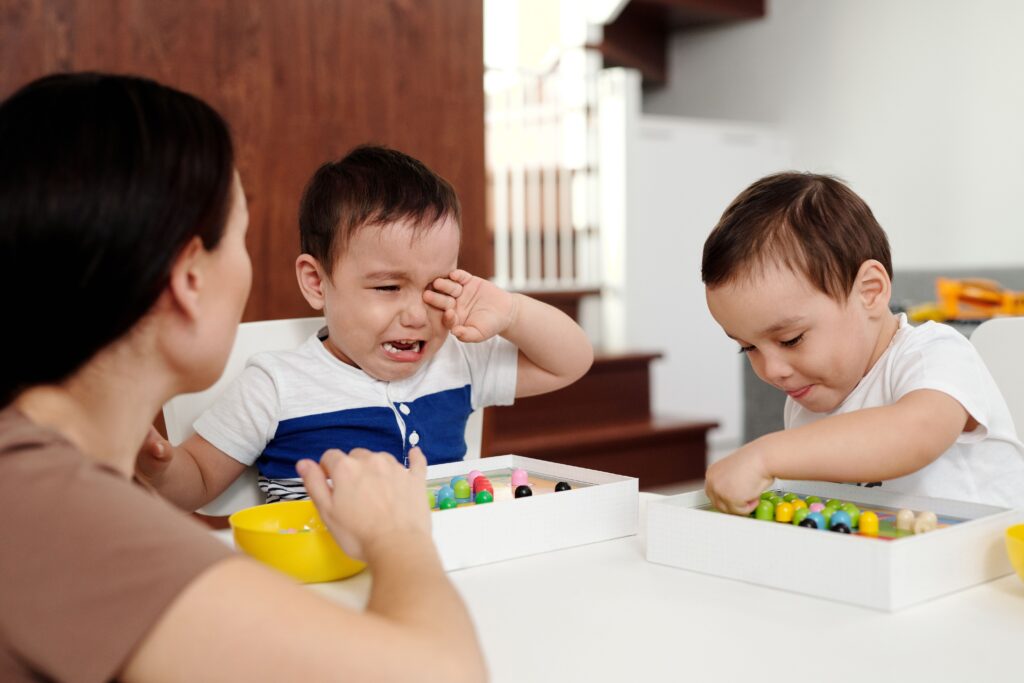
Every early years teacher has been there. Everyone is sitting in a neat little circle, the song has just started, and suddenly one child is on the floor in tears, shouting, or running for the door. The heart sinks, the other children stare, and it’s hard not to wonder what on earth just happened.
The good news is that there’s no need to have all the answers in that moment. Seeing a meltdown for what it typically is—a young child attempting to express themselves without the language to do so—may be helpful. Here are some thoughts on reading the signs, responding with kindness and keeping the whole circle feeling safe.
Why A Meltdown Is Rarely “Just Naughtiness”
Young children are still learning to name their feelings, manage their bodies and cope with a room full of noise. When those skills run out, big emotions tend to come out sideways. It’s nobody’s fault, least of all the child’s.
Before landing on “bad behaviour,” it can help to wonder what might be going on underneath:
- They may be tired or hungry.
- They may be overwhelmed.
- They may not understand what’s expected.
- They may not be able to find the words.
- Something may have happened elsewhere.
Many teachers find that once the question shifts from “what is this child doing wrong?” to “what is this child telling us?”, the whole response begins to soften.
Calm First, Everything Else Second
Youngsters learn to be calm from the adults in their environment. When a teacher tenses up, raises their voice or hurries to fix things, the meltdown often grows. A deep breath and a slower pace can make a big difference.
In the moment, a few things often help:
- Getting down to their level:Crouching so the child isn’t looking up at a towering adult.
- Using a quiet, steady voice:Short, simple phrases tend to work best, such as “We’re here. It’s okay.”
- Naming the feeling:“That looks really upsetting. That was a lot of noise.”
- Offering a calm space:Space to relax in a cosy area with a picture book or plush toy.
- Waiting:Explanations can wait until the storm has passed. Talking comes afterwards.
Learning To Read The Clues
Behaviour is communication, and with a little practice, patterns start to show. A quiet eye on what happens before, during and after a meltdown can reveal a lot.
A Few Things Worth Noticing:
- The time of day: Does it always happen at the same point in the routine?
- The trigger: Is it a loud song, a change in seating, or being asked to wait a turn?
- The body language: Covering ears, rocking, hiding or clinging can all signal overwhelm.
- What helps: Some children settle with a hug; others need space. It’s worth noting which works.
- How long it lasts: Short, occasional outbursts are quite different from frequent, intense ones.
A small notebook can be wonderful for this. Over time, those notes often say far more than guesswork ever could.
When It Might Be More Than A Bad Day
Most meltdowns are a normal part of growing up. Occasionally, though, they point to something that needs extra support, such as a speech and language delay, sensory sensitivities or developmental differences. Nobody expects a teacher to diagnose anything. The role is to observe, record and share what’s been seen with parents and colleagues.
This is where solid training can pay off. Many teachers find that a qualification such as an early childhood education degree online builds a deeper understanding of child development, which makes it easier to tell the difference between a tough afternoon and a child who needs a little more help. Even so, much of the real learning happens in the room, one child at a time.
Making Circle Time Easier For Everyone
Prevention is often the kindest approach. A few small changes can make circle time far more comfortable for children who find it hard. Some ideas worth trying:
- Keeping it short. Five to ten minutes is plenty for very young children.
- Using a visual routine. Picture cards showing what comes next help children feel secure.
- Offering choices. Letting children pick where to sit, or hold a fidget toy or soft cushion.
- Mixing movement and stillness. Songs with actions give little bodies a way to release energy.
- Giving a gentle warning. “Two more minutes, then we tidy up” helps children prepare for change.
- Allowing a break. Children can step out and return when ready, without fuss.
Talking To Parents Kindly
When parents learn that their child has experienced a meltdown, they may experience anxiety or embarrassment. Warmth, honesty and a positive tone go a long way. Beginning with something lovely about the child, describing what was noticed without judgement, and asking what parents see at home can open the conversation gently. Teachers and parents are on the same team, and that partnership is what helps children most.
Looking After The Teacher, Too
Supporting a child through a meltdown takes patience, and some days that supply runs low. Feeling flustered or tired is completely human, and there’s no need to be hard on oneself about it. Talking with a trusted colleague, swapping stories, and remembering that every experienced teacher has stood in exactly this spot can all help. A calm, caring adult is a child’s best support, and self-care is how that calm gets topped up.
Bottom Line
A meltdown during circle time is rarely about bad behaviour and almost always about a message waiting to be understood. When a teacher stays calm, looks for the clues and responds with kindness, a child receives something far more powerful than a lesson: the feeling of being understood. Nobody expects it to go right every time, and the children certainly aren’t looking for perfection. What they want is someone who notices, cares, and is happy to be there.
For those at the start of this journey and wondering where to begin, a B.Ed. in early childhood education can offer the knowledge, flexibility and support to grow with confidence, whatever the circumstances. A deep breath, a smile, and a little trust in oneself go a long way when stepping into that circle. The children are waiting to meet their teacher.